

+ Novotny Tihamér: A nyerő stratégia. (The Winning Strategy) - Fuzionista kollázs Ázbej Kristóf művészetéről. ........... ...Magyar Művészet 2022/4. (text in Hungarian)
 ↓
↓  ↓
↓  →
→


Fúzió virágokkal (Fusion with Flowers) 2024, original digital work, giclée on paper

↓
THE GREAT WALL - AND/OR THE BIGGEST MAP - OF HUMAN ENDEAVOR > A Large Scale Artwork Project + An Evolving Mega-Mural + A Worldwide Touring Exhibition
"The Glass Bead Game is thus a mode of playing with the total contents and values of our culture; it plays with them as, say, in the great age of the arts a painter might have played with the colors on his palette. All the insights, noble thoughts, and works of art that the human race has produced in its creative eras, all that subsequent periods of scholarly study have reduced to concepts and converted into intellectual property — on all this immense body of intellectual values the Glass Bead Game player plays like the organist on an organ. And this organ has attained an almost unimaginable perfection; its manuals and pedals range over the entire intellectual cosmos; its stops are almost beyond number. Theoretically this instrument is capable of reproducing in the Game the entire intellectual content of the universe." (Hermann Hesse, The Glass Bead Game, 1943)
„[The aspiration] to fashion an image of the world that will capture its infinite variety and richness”[…]„crops up throughout the history of art and humanity.” (2013 Venice Biennale curator Massimiliano Gioni)
MUSÉE X POINT ZÉRO / THE STORY OF THE COLLAGE
In the early 1980s, Kristóf Ázbej set up his apartment gallery in Bagneux, near Paris. On the walls of the studio, the artist designed an expansive, panoramic collage covering the entire wall surface of the apartment, which he continued working on until the late 1990s. The mosaic of tens of thousands of images constituting a brilliantly coloured panorama encapsulates centuries of experiences in the development of the collage technique and montage theory. It reflects the atmosphere of the decades preceding the turn of the millennium.

The artist's studio near Paris. Click on the image above to start virtual tour. 3D visualization: Vision Graphics Kft. Budapest
+ VIDEO: Series of Interviews with Visitors of the Musée X-Point-Zéro in Bagneux, France (English subtitles)
+ VIDEO: Art historian Dr. László Beke introduces the project. TAT Gallery, 2011 (English subtitles)
+ Beke László: Palimpszeszt és montázs. Új Művészet, 2016. Augusztus. (text in Hungarian)
+ Nátyi Róbert: Szubjektív enciklopédizmus. Tiszatáj Online, 2017. Április 24. (text in Hungarian)
THE INSTALLATION
The encyclopaedic work, titled "The Biggest Map of Human Endeavor", was brought home to Hungary in 2014 with the support of the Ministry of Human Resources and the National Cultural Fund of Hungary, following a recommendation by art historian Dr. László Beke. After the restoration of the collage, a 1:1 replica of the French apartment gallery was presented in 2016 by the Műcsarnok - Kunsthalle in Budapest. + Exhibition Wall Text

The installation . Click on the image above to start virtual tour. 3D visualization: Vision Graphics Kft. Budapest
ARTWORK INFORMATION
Title:
The Biggest Map of Human Endeavor (The Initial Segment)
Installation Title: Musée X-Point-Zéro
Alternative Titles: Grotto One, Memory Motel, The Big Memory Generator,
Eulogium Memorabilia, Great Wall of Human Adventure
Date: 1981 - 1996
Technique: double-sided collage
Mixed Media: printed papers, transparencies, adhesive tapes, ink, canvas
Dimensions: 230 x 2150 cm
Installation Dimensions: 2.8 m (H) x 10 m (L) x 4 m (W)
Original Location: Bagneux, France
PAST VENUES:
REÖK REGIONAL ART CENTER, SZEGED, HUNGARY, MARCH 31 - APRIL 30, 2017 >
ART MARKET BUDAPEST, OCT. 13 - 16, 2016 >
MŰCSARNOK - KUNSTHALLE BUDAPEST, JULY 27 - SEPT. 11, 2016 >
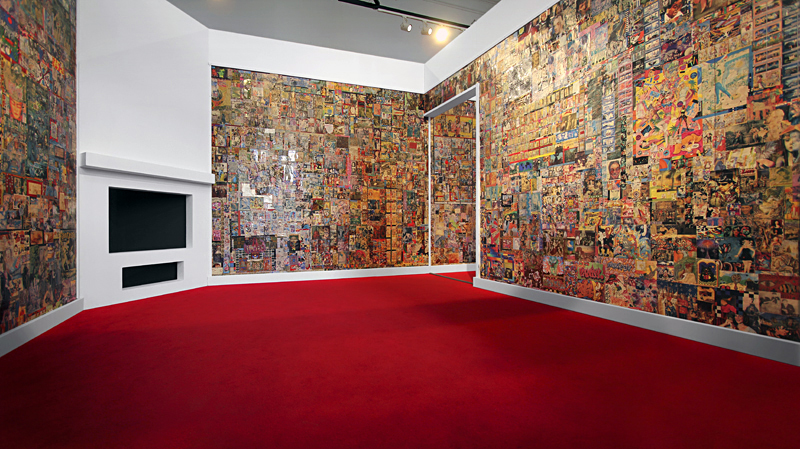
MUSÉE X-POINT ZÉRO, INSTALLATION AT MŰCSARNOK - KUNSTHALLE BUDAPEST, HUNGARY, 2016. PHOTOGRAPHY BY ANDRÁS ALAPFY
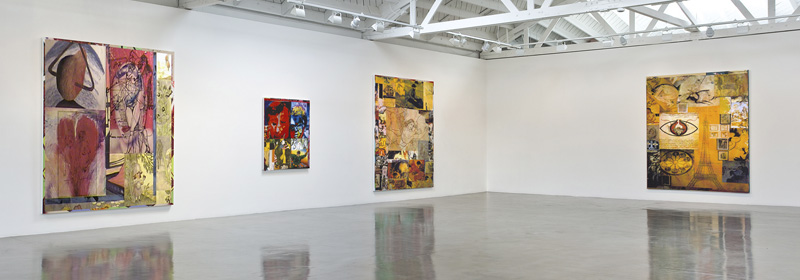
The Biggest Map of Human Endeavor (The Initial Segment) 1981 - 1996. – (Excerpted Segments, Limited Edition Prints) - Project visualization.

The
Biggest Map of Human Endeavor (The Initial Segment) 1981 - 1996.
The original artwork (left). The Reverse Side (right), Limited Edition
Diasecmounted Giclee print on aluminium composite panel. Project visualization.
THE WAY FORWARD
The artwork is the first realised part of a long-term art programme. According to the plans, the collage wall is planned to be built further.
fusion painting: Branching from montage theory, collage techniques, and appropriation art, fusion painting represents a synthesizing approach and picture-making practice in contemporary art, in which pictures are constructed solely from appropriated elements, bits and pieces of selected artworks. Pictorial samples taken from all periods of art history and a wide range of cultures are assembled, manipulated, remixed and fused together by using mixed digital techniques to create entirely new, original works of art. In the context of contemporary art, the term "fusion painting" was first used in 2014.
SELECTED DIGITAL WORKS :
+ LARGE VIEW - GRAND FORMAT.PDF - 2022
+ THE LOVING CUP SERIES.PDF - 2022
+ KALEIDOSCOPIC FUSION.PDF - 2021
+ Ázbej Kristóf digitális fúziófestészetéről – áthatás és áttetszőség. Képírás Internetes Folyóirat, 2020. (text in Hungarian)
+ Tea Time. Noprint Magazin, 2016. (text in Hungarian)
+ Paraphrase. Képírás Internetes Folyóirat, 2025

GICLÉE PRINTING AT PIGMENTA ART PRINT LAB. BUDAPEST. 2020
fusionism: The concept of fusionism in art was developed related to the first experiences with fusion art techniques. In the first version of the Fusionist Manifesto – The Winning Strategy written in 2011, fusion art is introduced as a brand new and eclectic tendency in fine art „that will open new territories, create new dynamics, generate new aesthetics and initiate new theoretical perspectives in art.” Fusionism is announced as a new "ism", fundamentally synergetic and relational, „experimenting with new type of collaborative methods and contexts in creative processes.”
fusionist manifesto: „No evolutionary future awaits man except in association with all other men. The egocentric ideal of a future reserved for those who have managed to attain egoistically the extremity of everyone for himself is false and against nature. No element could move and grow except with and by all the others with itself.
Also false and against nature is the racial ideal of one branch draining off for itself alone all the sap of the tree and rising over the death of other branches. To reach the sun nothing less is required than the combined growth of the entire foliage.
The outcome of the world, the gates of the future, the entry into the super-human -these are not thrown open to a few of the privileged nor to one chosen people to the exclusion of all others. They will open only to an advance of all together, in a direction in which all together can join and find completion in a spiritual renovation of the earth, a renovation whose physical degree of reality we must now consider and whose outline we must make clearer.” (Teilhard de Chardin: The Phenomenon of Man (1955), written 1938–40, as cited in The Fusionist Manifesto – The Winning Strategy, 2011)
fusion power: "Fusion power is power generated by nuclear fusion processes. In fusion reactions two or more light atomic nuclei fuse together to form a single heavier nucleus. In doing so they release a large amount of energy. Fusion is one of nature's most spectacular achievements. Fusion is the energy source of the Universe. It is the process that powers the stars. Billions and billions of fusion furnaces are flaring in the Universe, creating light and energy. What we see as light and feel as warmth is the result of a fusion reaction. In the core of the Sun, at temperatures of 10-15 million Kelvin, Hydrogen is converted to Helium by fusion, providing enough energy to keep the Sun burning, and to sustain life on Earth.
Scientists and engineers are working to reproduce fusion on a smaller scale. A prototype of working compact nuclear fusion reactor could be ready within five years.
the key to the future: Fusion power promises to be the ultimate energy source for the future. By the last quarter of the 21st century our world will enter the Age of Fusion, an age when mankind covers a significant part of its energy needs with an inexhaustible, environmentally benign, and universally available resource." (extracts from The Fusionist Manifesto – The Winning Strategy, 2011)
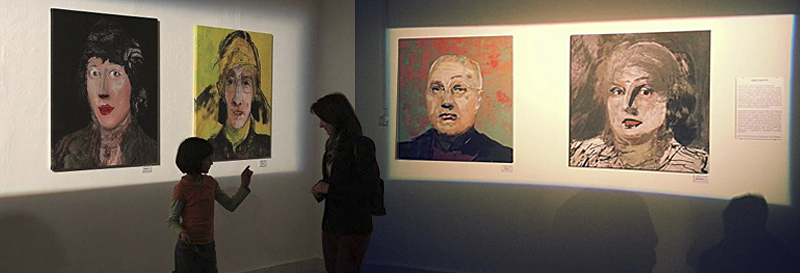
BUDAÖRS FESZTIVÁL EXHIBITION 2014. GICLÉE PRINTS ON CANVAS. 100 x 100 CM
PROJECT 3/4:
MESSAGE TO EARTH / THE CATUKAL CODE AND THE HARI SELDON LABYRINTH > A Large Scale Artwork Project Based on a Science Fiction Theme
THE CATUKAL CODE. Excerpt from the beginning of the "Message to Earth" script, by Kristóf Ázbej
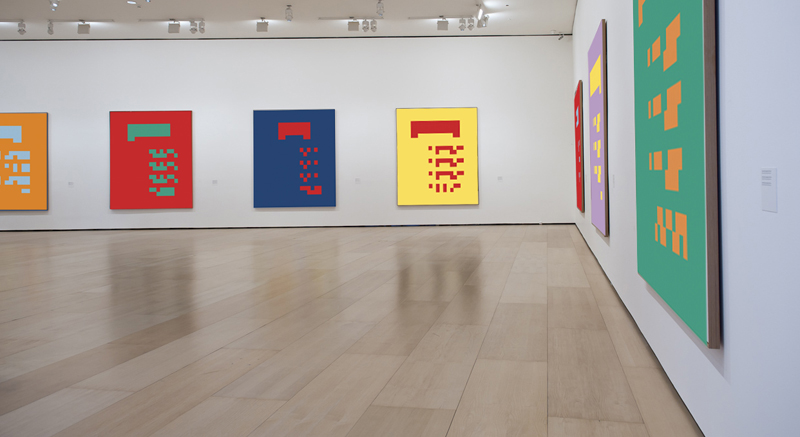
THE CATUKAL CODE 2013, PROJECT VISUALIZATION

ALIEN MONOLITS LAID OUT ON THE BASIS OF THE CATUKAL CODE DESIGNS, 2002, PROJECT VISUALIZATION
↓
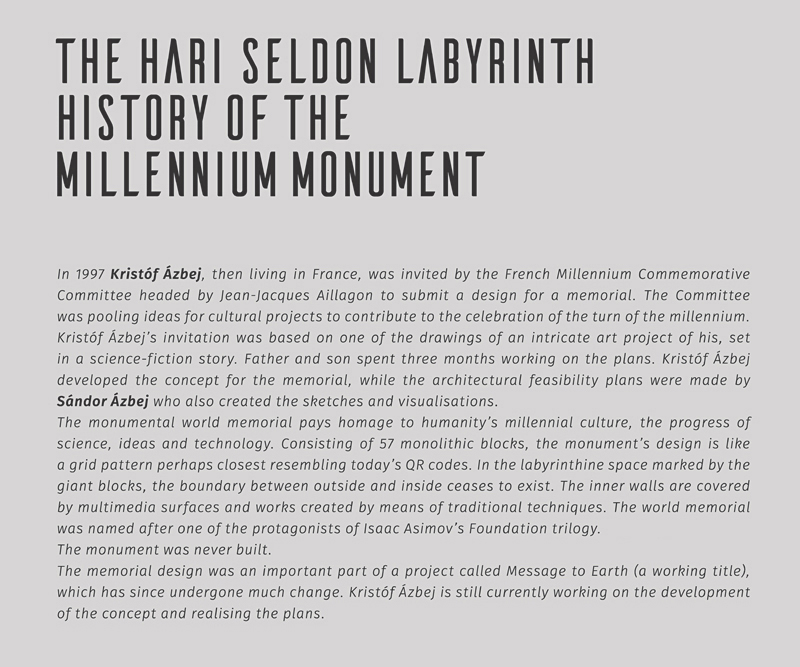

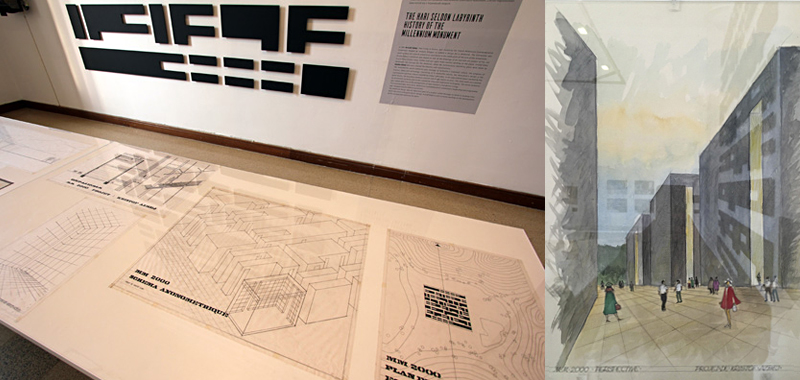
EXHIBITION AND PROJECT DISPLAY AT MŰCSARNOK - KUNSTHALLE BUDAPEST (ÁZBEJ & ÁZBEJ | ALGIERS - BUDAPEST - PARIS |2016)
PROJECT 4/4:
New content will be added soon.

© 2010 - 2025 Kristóf Ázbej - Contemporary Art Proposals - All Rights Reserved